We became very good at knowing ourselves. And I mean that genuinely. There is a whole generation of people right now who can trace their anxiety back to its root, name their attachment style with clinical precision, identify the samskara that activates when a certain kind of person walks into a room, describe the exact sequence of thoughts that precedes the spiral. That is not nothing. That took real time, real honesty, and in many cases real pain to arrive at.
But there is a question that the inner work world rarely asks, and it is the one worth sitting with here: when did the knowing start to feel like enough?
There is a particular kind of comfort that comes from understanding why you are the way you are. It is not the comfort of ignorance; we left that behind a long time ago. It is something more refined than that. It is the comfort of a well-organised interior, of being able to name what is happening inside you before anyone else sees it, of having a language for the patterns that used to run you completely. That language feels like liberation, and at the beginning, it is.
The problem is that the mind, which is extraordinarily adaptive and more interested in its own survival than in your actual transformation, eventually learns to live inside that language. It learns the vocabulary of shadow work and uses it to become a better narrator of its own behaviour rather than a different one. It learns the framework of nervous system regulation and uses it to explain, with great sophistication, why it cannot do the thing it needs to do. It turns the tools designed to dissolve it into instruments of self-description, and self-description, no matter how accurate, is not the same as change.
This is not a failure of willpower or discipline. It is something more subtle and more interesting than that. It is the ego doing what the ego has always done: finding the most sophisticated available version of staying exactly where it is.
Think about how the inner work path tends to unfold for most of us. Something cracks open. A book, a breakdown, a practice, a conversation that changes the quality of the room. We start to see things we could not see before. And the seeing is genuinely significant, so we go looking for more of it. We read more widely. We go deeper into the frameworks. We find communities of people who are doing the same thing, and we share our insights and recognise each other's patterns and feel the particular warmth of being finally understood.
And then, quietly, the seeking of insight becomes its own destination. Because insight, unlike actual change, is immediately rewarding. It arrives with a feeling. A click of recognition, a sense of expansion, a brief but real experience of having moved. The nervous system registers it as progress. And so we keep seeking it, keep collecting it, keep curating an ever more nuanced understanding of who we are and how we came to be this way.
Meanwhile, the patterns continue. Maybe they are slightly more visible to us now. Maybe we can name them in real time instead of only in retrospect. But they continue. The same dynamics in relationships. The same loops under pressure. The same gap between who we understand ourselves to be and how we actually move through the world when things get difficult.
Awareness without movement eventually becomes its own comfort. Another way of feeling special without changing much.
The yogic tradition, which understood human psychology with a precision that still astonishes, names this territory with exactness. The witness state, sakshi, the observer, is a real and important stage of the path. The capacity to watch the movements of the mind without being completely identified with them is not a small thing. It took real practice to develop. It is worth having.
But the tradition is also unambiguous that the witness state is not the end of the path. It is the beginning of the inner path. Pratyahara, the withdrawal of the senses and the turning of attention inward, is the fifth of Patanjali's eight limbs, not the eighth. It is preparation, not arrival. What follows it is dharana, and then dhyana, and then samadhi: concentration, absorption, union. The movement from watching to engaging, from observing the pattern to actually interrupting it, from understanding the mechanism to changing the mechanism through sustained and embodied practice.
The Bhagavad Gita, which is not a gentle text, is equally direct. Arjuna wants to withdraw. He wants to sit in understanding and not act. And Krishna, across eighteen chapters, tells him the same thing in different ways: the path is not in the renunciation of action. The path is in the right relationship to action. You cannot think your way to transformation. You cannot observe your way to a different life. At some point the understanding must become movement, or it will slowly, comfortably calcify into another form of sleep.
Here is the part that is worth really sitting with: the ego does not fear awareness. This surprises people, because we tend to think of the ego as something that hides from the light, something that wants us to stay unconscious, to stay reactive, to never look too closely at what is actually driving us.
And that is true, in the early stages. But the ego is adaptive in ways we consistently underestimate. Once it realises that the awareness path is where its host is going to spend their energy, it does not resist it. It joins it. It learns the language. It develops a real fluency in self-reflection. It becomes the one doing the reflecting, which means that the reflection, however accurate, remains safely inside the ego's own territory.
What the ego cannot tolerate is not awareness. It is the movement that awareness is supposed to produce. The actual behaviour change. The moment you take what you have understood about yourself and walk it back into the ordinary difficulty of your life: the relationship, the creative work, the old dynamic with your family, the fear that has been named and mapped and understood and is still, somehow, running the same old programme in your body. And you choose differently. Not because you feel ready. Not because you have achieved sufficient insight. But because you have decided to move.
That moment is where the ego cannot follow you. That moment is where the real path begins.
We are not saying this to be harsh. We are saying it because we have been in this loop ourselves, and because the spiritual community, which has done genuinely beautiful work in making inner work accessible and less stigmatised, has also created a culture in which the accumulation of insight is treated as equivalent to the doing of inner work. Books are celebrated. Frameworks are shared. The language of growth is everywhere. And underneath it all, quietly, the actual territory of change, which is unglamorous and non-linear and does not produce the feeling of expansion that a good insight produces, goes largely unaddressed.
The threshold we are pointing to is not dramatic. It does not require a retreat or a revelation or a complete overhaul of the life. It is much simpler and much harder than that. It is the moment, in the middle of an ordinary day, when the pattern you have spent years understanding begins to activate and instead of observing it, narrating it, and allowing it to run while congratulating yourself on having noticed it, you interrupt it. You choose a different response. You move the body differently. You say the thing you have been afraid to say, or you do not say the thing you have been unable to stop saying. You act from the understanding rather than merely holding the understanding in your head.
That is the work. Not glamorous. Not immediately rewarding in the way that insight is rewarding. But it is the only thing that actually changes the groove in the mind, which is what transformation is, at its most practical level. Not a new understanding of the old groove. A new groove.
We want to be precise about what we mean by movement, because it is easy to hear this and reach for activity: for doing more, for adding practices, for filling the silence with structured effort. That is not what we are pointing to.
Movement, in this context, means the closing of the gap between what you understand and how you live. It is deeply interior and it is also entirely practical. It shows up in the split second between the trigger and the response. In whether you open the practice or close the app. In whether you speak from the part of you that knows or from the part of you that is afraid. In whether you are using your understanding of yourself as a lens through which to see more clearly, or as a comfortable room in which to remain indefinitely.
The traditions give us the framework. The practices give us the conditions. But neither the framework nor the practices can close that gap for us. There is a moment in which only we can move, and the path, every genuine path, in every tradition we have studied, eventually arrives at that moment and asks us what we are going to do with it.
The question is not what do you know about yourself. The question is what are you doing with what you know.
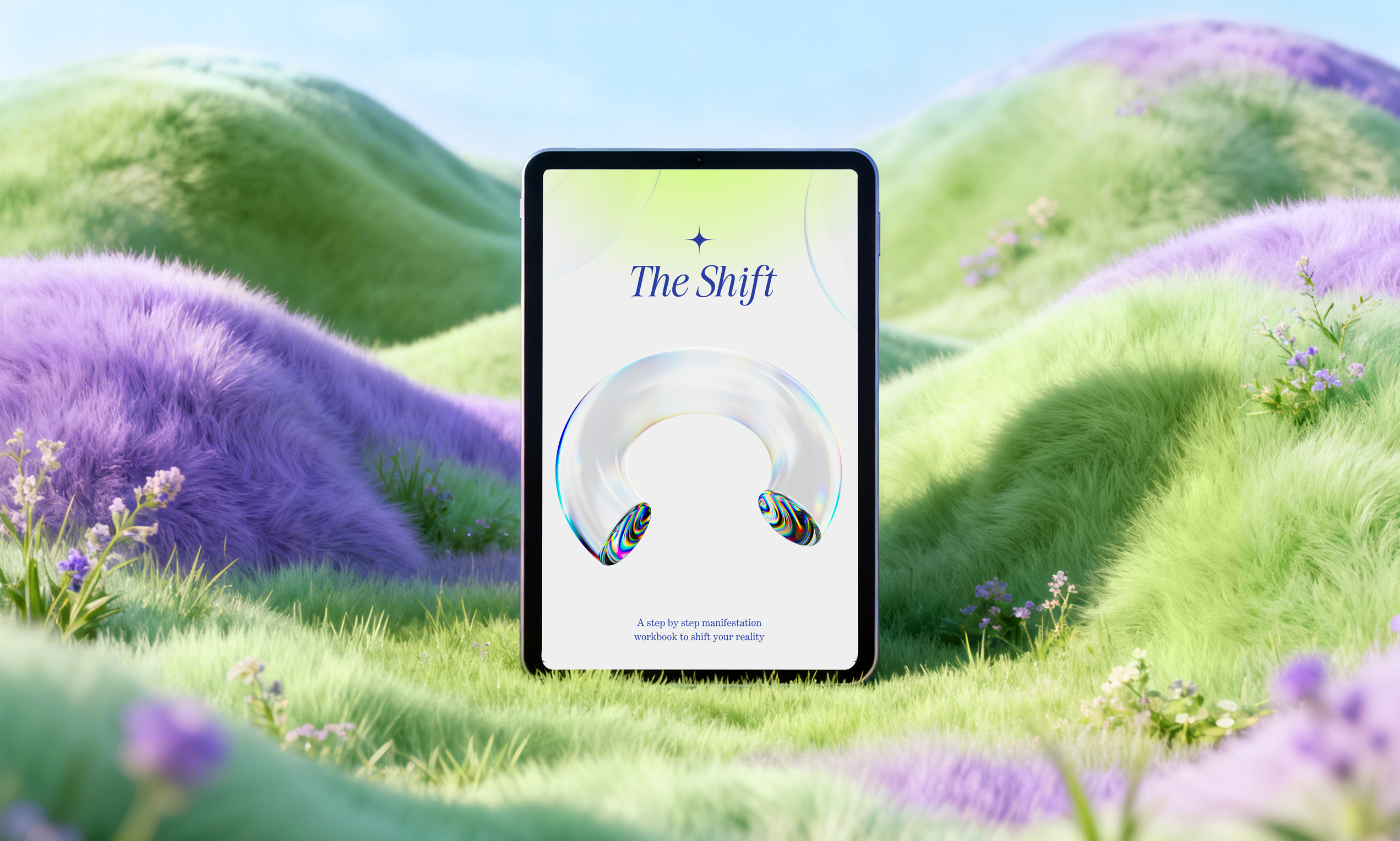
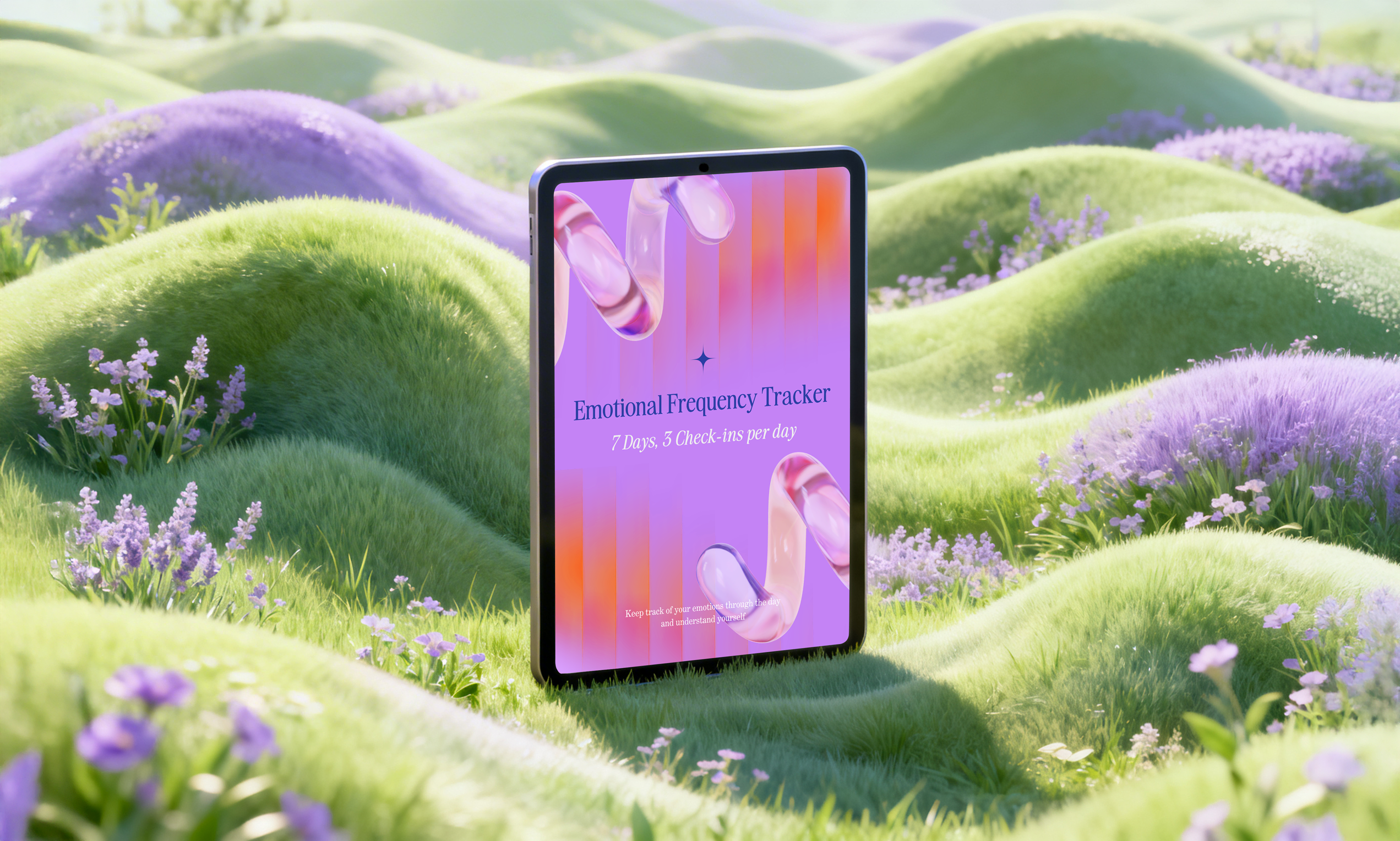
If this landed somewhere real, the workbooks are where we take it further. Your next. move






.png)

.png)
.jpg)