.png)
The summer solstice arrives like a held breath finally released. Most of us mark it without stopping, moving from the longest day of the year directly into the second half without pausing to ask the only question that matters at this threshold: who have I been in the first six months, and is that who I want to carry into the next six?
A mid-year inner audit is not the same as a goal review. Goal reviews ask what you have achieved or missed. An inner audit asks something more layered and more useful: what has been running underneath everything, at the level of identity, energy, belief, and pattern. It asks not just what happened, but who you were while it was happening.
This is the distinction that changes everything.
January carries the energy of blank slates and fresh starts, which makes it excellent for setting intentions and genuinely difficult for honest self-assessment. We are too close to the end of the previous year, too hopeful about the one beginning, and too attached to the story we want the year to become.
The halfway point carries something different. By late June, we have six months of actual lived information. We know which intentions quietly fell away and which ones took root. We know which version of ourselves has been showing up in our relationships, in our work, in our bodies, and in our inner life. We know, if we are honest, what the first half of the year has actually been, beneath the surface of what we told ourselves it would be.
This should be a place for honest witnessing and not judgement. And honest witnessing is the precondition of genuine change.
Research in future self psychology, notably the work of Hal Hershfield, consistently shows that the more vividly and specifically we can see both our current self and our desired future self, the more likely we are to make present choices that serve the person we are becoming. Vagueness keeps us loyal to who we have been. Specificity is what begins to pull us forward.
The mid-year inner audit creates that specificity.
Most reflection exercises stay at the surface. They ask questions like "what went well?" and "what could improve?" and they generate answers that are equally surface-level, answers we already know, answers that leave us feeling like we have done something meaningful without actually disturbing anything real.
A genuine inner audit goes beneath the events of the year to the operating system that has been running them. It looks at the identity you have been inhabiting, the beliefs that have shaped your choices, the emotional patterns that have visited most persistently, and the gap between who you feel yourself to be and who you feel yourself becoming.
It does this systematically, across every major area of life, so that nothing gets left in the blind spot.
The nine life sectors that a comprehensive inner audit covers are the following: spiritual practice and inner life, identity and self-concept, emotional landscape, body and physical vitality, relationships and intimacy, creative expression, career and purpose, financial life and abundance, and environment and home. Each one deserves its own honest inquiry, because each one carries information about what the second half of the year needs.
This sector is the one most people either over-romanticise or quietly avoid. We either tell ourselves our practice is consistent when it has become habitual and hollow, or we feel shame about how far we have drifted from it and cannot look directly at the distance.
There is a principle in Tantric philosophy worth holding here: consciousness is the condition, and practice is the act of removing what obscures it rather than acquiring something we do not already possess. Through that lens, the question of how your spiritual life has been in the first six months is less about how many times you meditated and more about how much of yourself you have allowed to be seen, by you.
The honest questions to sit with in this sector are the following:
When in the past six months did you feel most connected to something larger than your thoughts? Not in a general sense, but in a specific moment you can name and describe.
If your spiritual practice were a relationship, how would you honestly characterise the dynamic between you two this year? Devoted? Neglectful? Functional but distant? Alive and deepening?
Self-concept psychology, drawing on the foundational work of Carl Rogers and later Hazel Markus, points to a consistent finding: we behave in ways that are congruent with how we see ourselves, almost always, regardless of how we see the world. This means the version of yourself you have been operating from in the first six months has been the single most powerful determinant of every pattern, every choice, every repetition in every other area of your life.
Every pattern can be traced back to an identity that has been running quietly in the background. The question is whether that identity is one you chose consciously or one you inherited, absorbed, or defaulted into.
The Tantric traditions named the mechanism behind this the ahamkara, the I-maker, the function by which pure consciousness identifies with a particular story and begins to live inside it as though it were the whole truth. The mid-year audit is, among other things, a deliberate interruption of that mechanism. An opportunity to see the story clearly enough to choose whether to continue living inside it.
Questions to sit with here include the following:
How would you describe the version of yourself who has been running the show in the last six months? Give her a name, a posture, a mood. Make her specific enough to recognise.
When did you catch yourself responding from a version of yourself you thought you had outgrown? What triggered that response?
Lisa Feldman Barrett's research on emotional granularity demonstrates that the precision with which we can name and differentiate our emotional states is directly connected to our capacity to regulate those states and make choices that align with our values. People who can name their emotions with more specificity have measurably better mental health outcomes, stronger relationships, and greater capacity for intentional action.
This means that asking yourself "how have I been feeling this year?" and answering "stressed" or "fine" is not actually reflection. It is avoidance dressed as reflection. The emotional audit asks for something more granular and more honest.
The questions worth sitting with in this sector are these.
If you had to name the emotional signature of your first six months in three words or fewer, what would they be? Reach for precision rather than size. Adrift. Quietly burning. Suspended. Tender. Armoured. The right words will feel slightly uncomfortable in their accuracy.
What emotion visited most persistently in this season, and what do you sense it was trying to communicate?
The body keeps records that the mind rarely has access to. What is held in the tissues, the posture, the sleep patterns, the appetite, the chronic tension that returns to the same location year after year, these are expressions of the inner life and they are always honest. Somatic psychology has long understood what the yogic tradition articulated millennia earlier: the body is a map, and it is continuously attempting to communicate something to the person who inhabits it.
When we bypass the body in our reflection, we miss the most reliable source of information available to us.
Questions for this sector include the following:
What has your body been asking for in these six months that you have given it? And what has it been asking for that you have consistently deferred?
What does your body feel like at the end of a typical day in this season of your life? Describe the physical state as precisely as you can, without interpretation.
Attachment theory tells us that we do not experience our relationships in isolation. We bring an entire history of relational patterns into every exchange, and those patterns run largely on automatic until something wakes them up. The relational audit is an inquiry into the patterns you have been operating from, not an assessment of the people in your life.
This distinction matters. The question is not whether your relationships are good or bad. The question is what version of yourself has been showing up within them, and what that reveals.
Questions worth sitting with here are these:
Which relationship in the past six months has most reflected something back to you about yourself, in the way that only close proximity can? What did it show you?
Where have you been most closed to receiving, whether in love, support, presence, or practical help, and what has kept that door narrower than you would like?
Creative expression, in the broadest sense, is the process by which the inner world becomes visible. It includes art and writing and music, yes, but it also includes how you move through a room, how you solve problems, how you speak when you are most fully yourself, how you arrange the details of your daily life. It is the signature of your consciousness on the material world. And when it contracts, something essential contracts with it.
Questions for this sector include the following:
Where in the past six months have you felt most creatively alive, even in small and unmarked moments?
What have you wanted to make, express, or bring into form that you have been holding back? And what is the story you have been telling yourself about why?
Purpose is not a job description, and career is not a synonym for meaning, though they can overlap. Acceptance and Commitment Therapy speaks of values-congruent action as one of the most reliable predictors of meaning and psychological wellbeing. The question this sector asks is whether the hours you have been giving your working life have been in service of something that feels genuinely yours.
Questions to consider here are these:
When in the past six months have you felt most genuinely purposeful in your work, and what was happening in that moment? What made it feel different?
What has been asking to grow or expand in your career or creative work that you have been approaching slowly, or have yet to approach at all?
Money carries more psychological weight than almost anything else we regularly encounter, because money has almost nothing to do with money and almost everything to do with safety, worth, freedom, and belonging. The way we relate to money, whether we hold it anxiously, avoid looking at it directly, carry shame around it, or treat abundance as something that belongs to other people's lives, is one of the clearest windows into the deeper belief systems we carry about our own worthiness and what we are allowed to receive.
Questions for honest inquiry in this sector include the following:
What is your honest emotional relationship with money at this point in the year? Name it as precisely as you can. Guarded? Avoidant? Quietly resentful? Genuinely expanding?
What belief about wealth, abundance, or receiving have you noticed running most persistently underneath your financial reality in these six months?
The outer environment is not separate from the inner one. The space we inhabit shapes us as much as we shape it. Research on cognitive load confirms that cluttered or unintentional environments create measurable increases in cortisol and reduce the capacity for clear thinking, while spaces aligned with our emotional and aesthetic needs actively support nervous system regulation. The container we live in either supports or depletes the person we are trying to become.
Questions worth sitting with here include the following:
Does the space you live in feel like it belongs to the person you are now, or to an earlier version of you? What would need to change for the answer to shift?
What is one aspect of your physical environment that has been subtly draining your energy in these six months that you have been tolerating rather than addressing?
After moving through each of the nine sectors honestly, a pattern tends to emerge. The same thread runs through multiple areas. A particular way of showing up, a consistent belief, a recurring contraction or a recurring aliveness, that appears across spiritual practice and relationships and creative expression and finances simultaneously.
This is the identity layer, and it is where the most significant recalibration happens.
Narrative therapy describes the dominant story as the story about ourselves that has accumulated the most evidence, the most repetition, the most unconscious confirmation over a lifetime. It feels like reality rather than a story, which is precisely what makes it so durable. We live from it without noticing we are living from anything at all.
The mid-year audit, done with genuine honesty across all nine sectors, makes the dominant story visible. And once something is visible, it becomes a choice rather than a default.
The question that sits at the centre of the identity audit is this one: what would you have to believe about yourself to make the second half of this year genuinely different from the first?
Self-determination theory, developed by Deci and Ryan, identifies autonomy, competence, and relatedness as the three fundamental psychological needs whose fulfilment predicts human flourishing. When the distance between our current identity and our desired identity feels impossible to cross, it is almost always because at least one of these needs is being consistently bypassed in our daily life.
The gap between who you have been and who you feel yourself becoming is information, and it is yours to work with. Every person who has ever crossed a genuine threshold has had to stand in that gap long enough to see it clearly before they could move through it.
The questions that illuminate the gap most directly are these:
Describe the version of yourself who has been operating in the first half of this year. Who has it been at her most familiar and most stuck?
Describe the version of yourself you feel yourself becoming. Who is this person, in felt qualities and daily reality rather than abstract aspiration?
Once the honest witnessing is complete, what follows is recalibration. This is the forward-facing part of the audit, and it operates on a different principle than goal-setting.
Goals are destinations. You arrive at them or you miss them. Values and identity are directions. You move toward them continuously, and every day has a quality determined by how congruent your actions are with the direction you most care about.
The recalibration asks not what you want to achieve in the second half of the year but who you are choosing to be, sector by sector, month by month. It asks what a single directional intention for each area of your life looks like when it is rooted in identity rather than outcome.
Research in implementation intentions, developed by Peter Gollwitzer, consistently shows that the specificity of the intention is the single greatest predictor of whether it is sustained. We sustain the changes that become part of who we are. We lose the changes that remain separate from our sense of self.
This is why the audit closes with an identity declaration rather than a list of goals. An intention without an identity to carry it collapses under the first real pressure of daily life. The declaration is the act of choosing, in writing and with full awareness, who you are taking into the second half of the year.
Everything described in this post is structured as a 40-page guided inner audit called 6 Months In, created by Aurealis for the halfway point of the year.
The guide includes five interactive diagrams, the Wheel of Life across all nine sectors, the Self-Concept Constellation for identity mapping, the Gap Map, the Values Compass, and the Six-Month Intention Map. It includes deep psychological prompts for each sector, a Future Self Visualization, and the Identity Declaration to close.
It is fillable on most devices, including iPad apps like GoodNotes and Notability, and it is printable for those who prefer writing by hand.
It is completely free.
If this post opened something you want to take further, the guide is where that work continues with the structure and depth it deserves.
Get the free guide here.
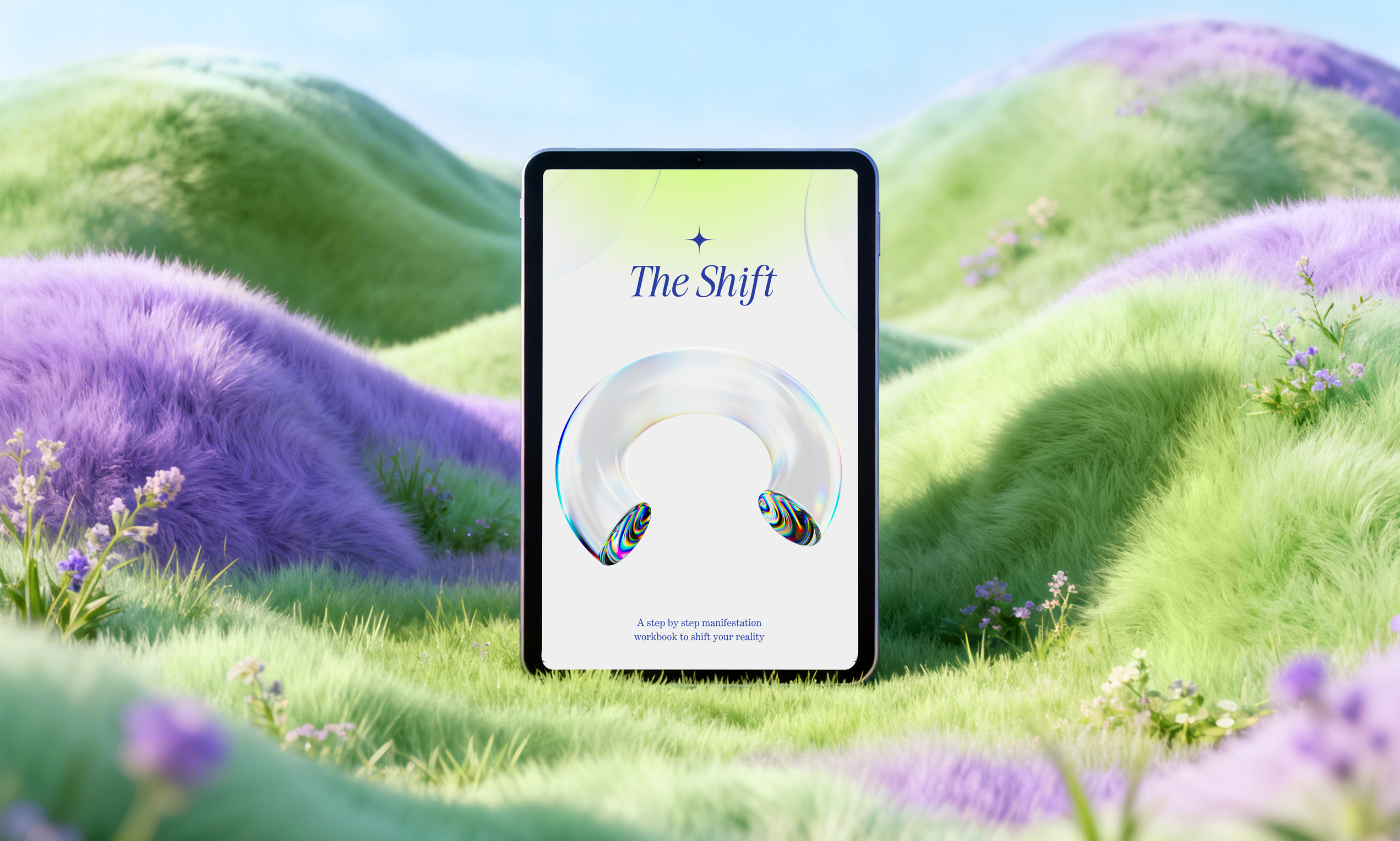
If the identity and self-concept work in this audit resonates with something you are ready to take further into a structured practice, the Higher Self Workbook holds exactly that process. And if the manifestation and energy sections opened something, The Shift is where that work lives. Both are available at aurealisspirituality.com.







.png)

.png)
.jpg)